How to make important stuff happen
Everyone has a list of things that would genuinely change something — learn the language, get the certification, finish the book, get properly fit, build the thing you keep describing to people at parties. And most of those lists look the same in December as they did in January.
It isn’t a motivation problem. It’s a scheduling problem wearing a motivation costume.
Important things don’t have deadlines
Look at what actually wins your Tuesday. The invoice that’s due. The reply someone’s waiting for. The meeting at eleven. Every one of them arrives with a date attached, and dates are what your day responds to.
Now look at the thing that matters most to you. It has no date. It never will — nobody is going to email you asking where your fitness is. So it loses, quietly, every single day, to things that are objectively less important but come with a deadline stapled to them.
That’s the whole mechanism. Not laziness. Not lack of discipline. Just an unfair fight between something with a date and something without one.
Habit one: put the goal where the decisions happen
You can’t act on a goal you can’t see. And most people’s goals live somewhere they never look while deciding a day — a note from a New Year’s evening, a document from a planning session, a folder called personal.
So the first move is embarrassingly simple: put the goal in front of you at the moment you decide what today is for. Not in a review app. Not in a system. In your field of vision, in the same place where you choose what happens next.
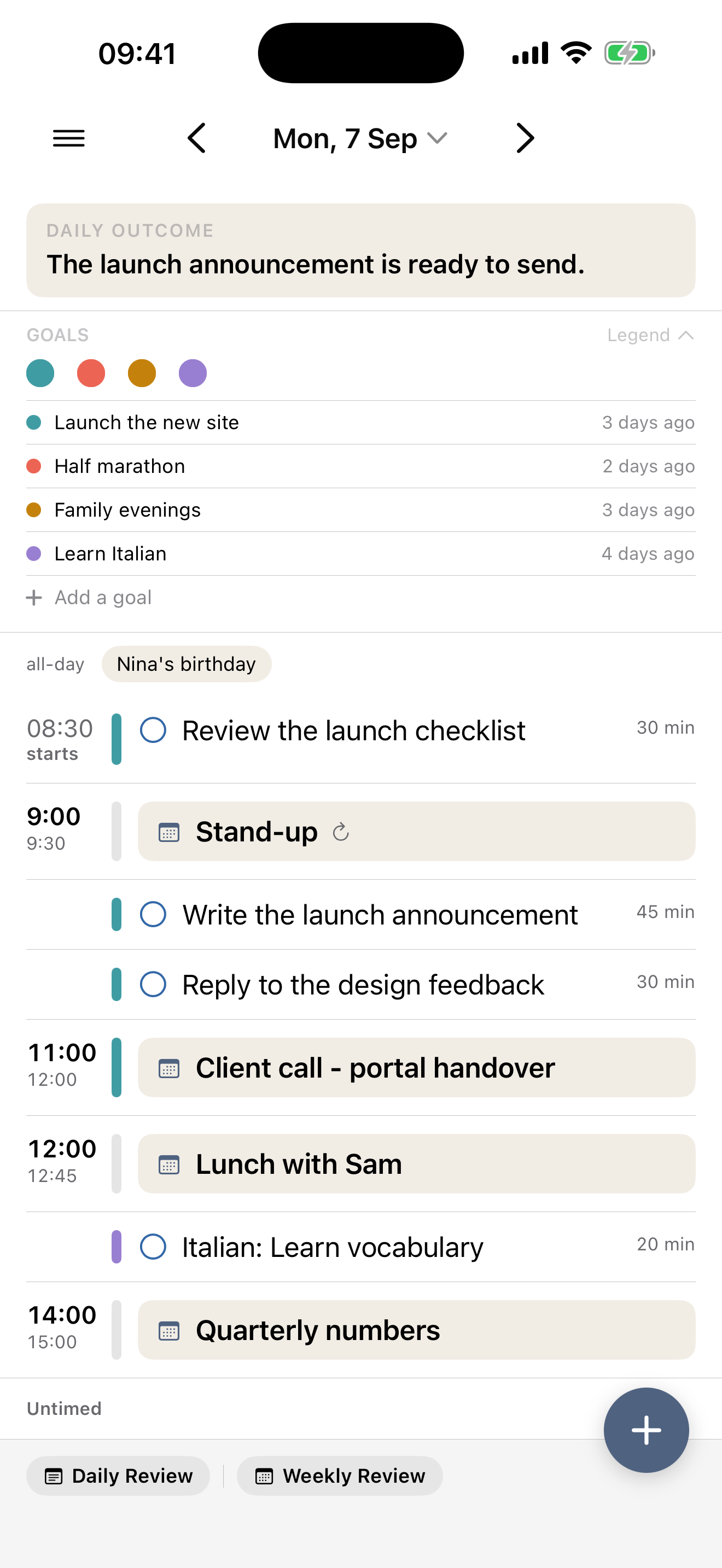
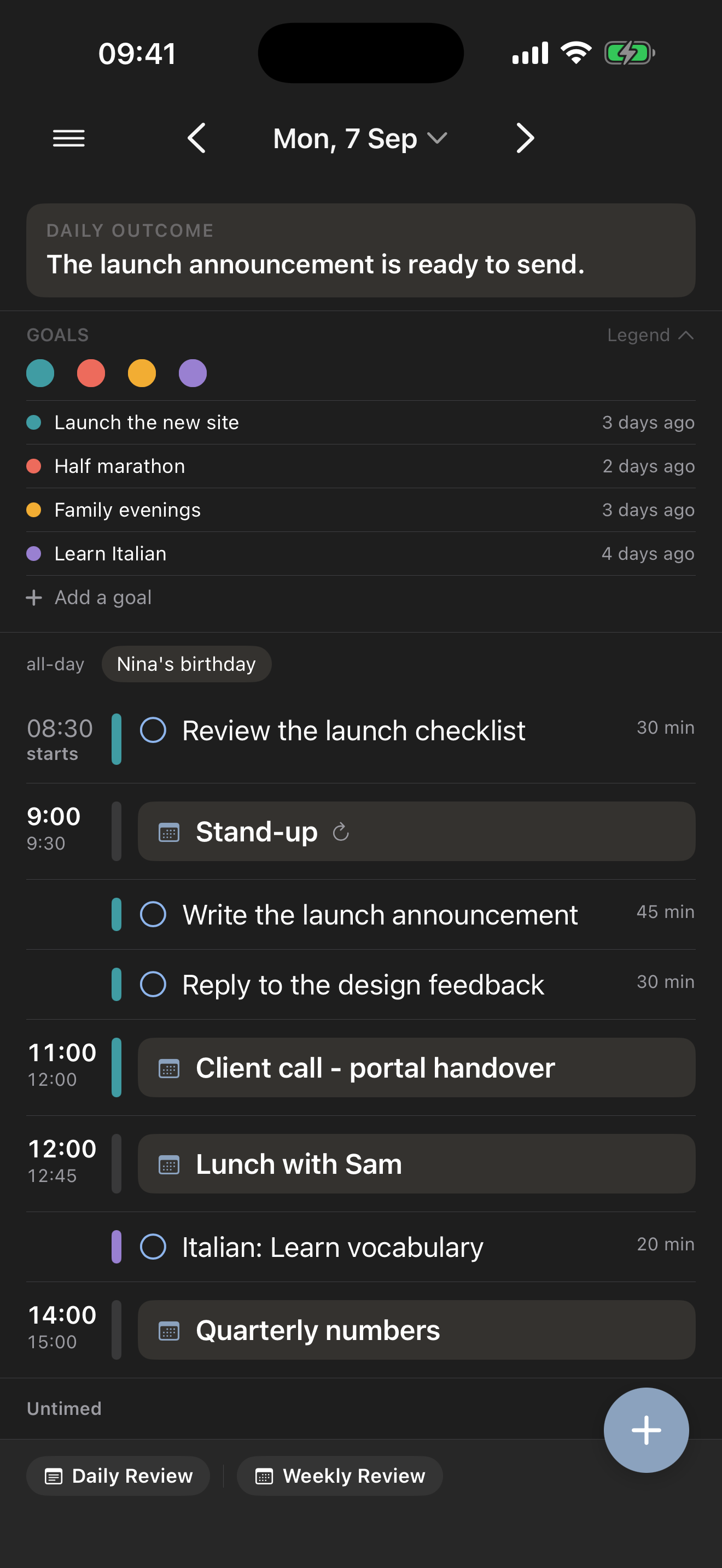
When the goal is visible while you plan, something shifts. You don’t have to remember to be ambitious — you just notice, most days, that nothing on the list is pointed at the thing you said mattered. Noticing is enough. It’s much easier to add one small thing than to summon willpower from nowhere.
Habit two: shrink the step until it fits
The second reason big things stall is that we plan them at the wrong size. “Get fit” isn’t a task. Neither is “learn Spanish” or “write the book”. They’re directions, and a direction can’t go in a day.
So shrink the next step until it fits the time you actually have — not the time you wish you had. Twenty minutes. One phone call. Two pages. A single exercise. Small enough that you’d feel faintly silly not doing it.
The reflex is to resist this, because a twenty-minute step feels insultingly small against a goal that big. But compare two years honestly:
- Twenty minutes, four times a week: about 70 hours a year.
- The heroic Saturday you keep postponing: about zero hours, because you keep postponing it.
Regular beats heroic every time, and it isn’t close. The small step also survives a bad week, which the heroic plan never does.
Link the step to the thing it serves
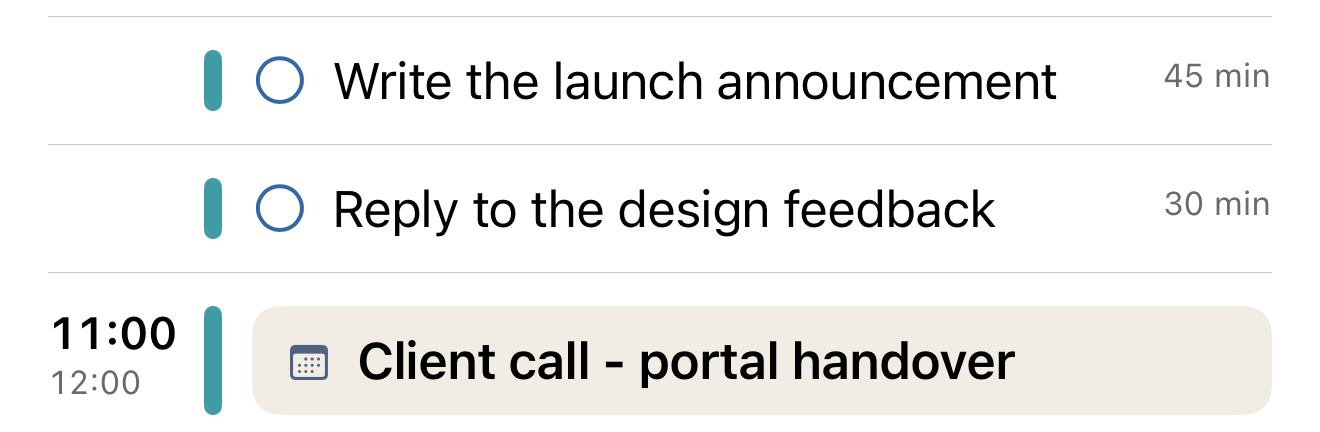
Here’s where the two habits meet. A small task on its own looks trivial — read ten pages, email the trainer, draft one paragraph. Trivial things get bumped.
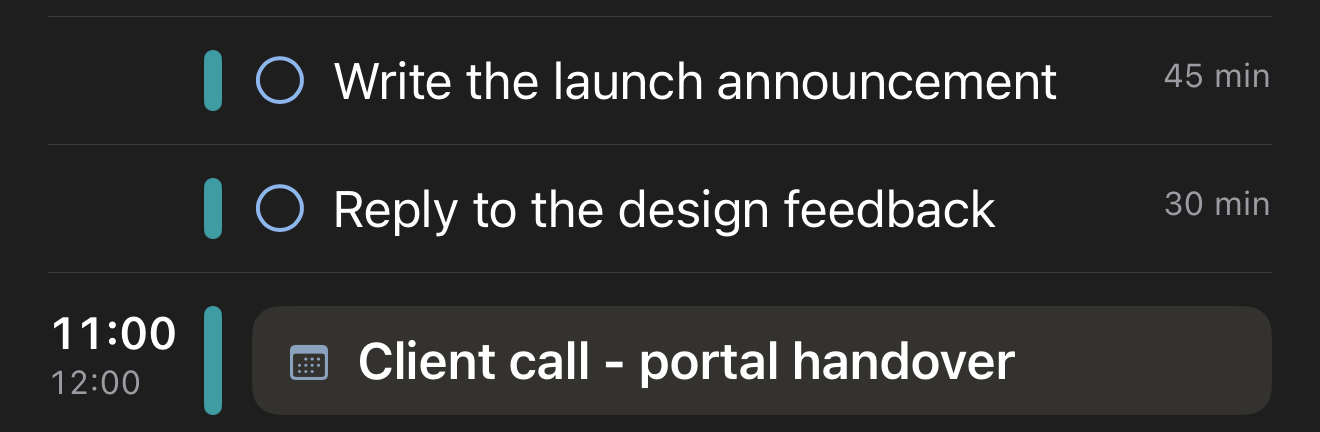
The same task, visibly attached to the goal it serves, is a different object. It stops being a chore and becomes the twentieth instalment of something you care about. That’s a meaningful difference at 4pm on a Thursday, when you’re deciding whether to bother.
Then look back, once a week
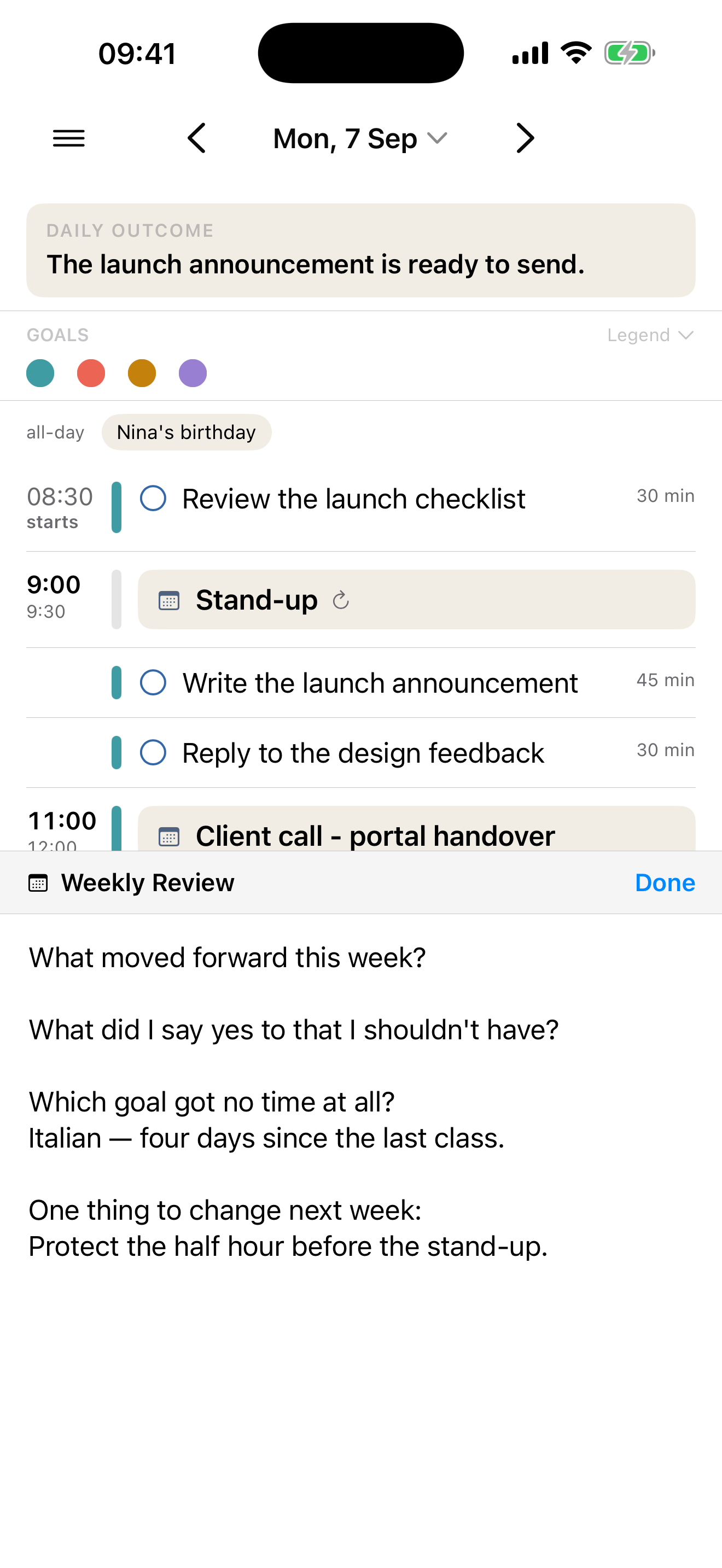
The last piece takes about a minute. Once a week, look at the days behind you and ask a plain question: did anything actually move?
Not “was I busy” — you were. Whether the thing you named as important got any of your week at all. If it did, that’s evidence you can trust more than a feeling. If it didn’t, you’ll usually see exactly where it went, and next week can be different in one specific way rather than in a vague resolution to try harder.
Most weeks, the honest answer is “a little” — and a little, repeated, is how important stuff happens. Not in a burst of transformation. In small, regular pieces, given to an ordinary Tuesday.
Make My Day keeps your goals above the day, lets you link the small real tasks to them, and gives you somewhere to look back at the end of a week. See how it works.