The plan that never survives the day
You wrote down nine things this morning. It’s five o’clock and you’ve done four, two of which weren’t on the list. The other five roll over to tomorrow, where they’ll join tomorrow’s nine.
Do that for a week and something corrosive sets in: you stop believing your own plans. And a plan you don’t believe is worse than no plan, because now you’re carrying the weight of it without getting the benefit.
You planned for an empty day
Here’s the thing nobody accounts for. When you write the list, you’re looking at a blank page — and a blank page holds an infinite number of tasks.
Your actual day doesn’t. It has a meeting at ten, a call at two, the thirty minutes after each of them when your brain is still in the previous room, lunch, the school pickup, and the two interruptions you can’t predict but can absolutely count on. What’s left for the nine things is maybe three hours.
The list wasn’t ambitious. It was written against the wrong day.
Plan against the space, not the page
The fix is to make the day’s real shape visible before you decide what fits in it. Not as an afterthought — as the starting point.
When your appointments are already on the timeline and you add tasks into what’s left, the maths does itself. You can see there’s an hour before the ten o’clock, and that the afternoon is essentially gone. You don’t need discipline to plan realistically; you just need to be looking at the right thing.
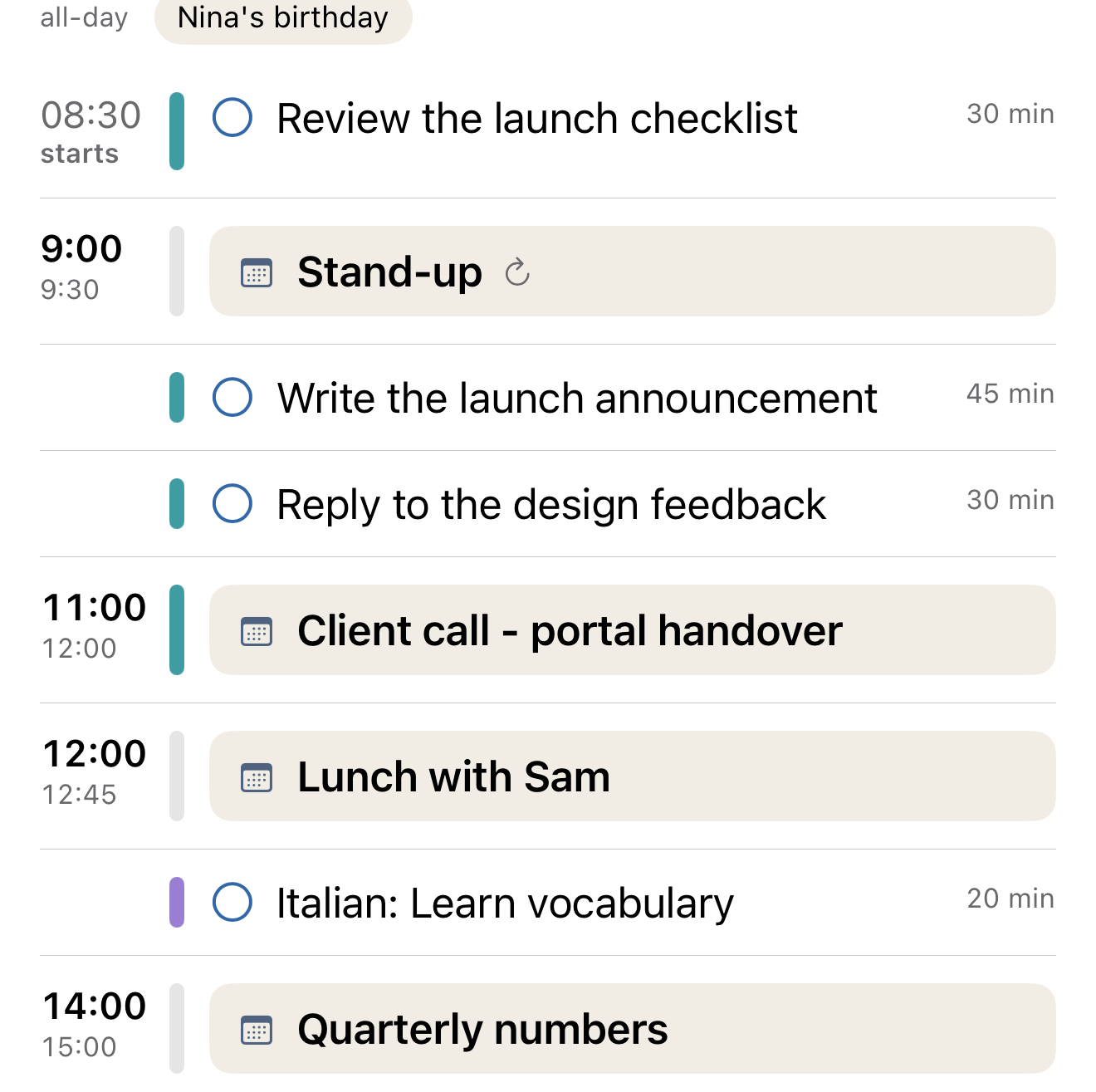
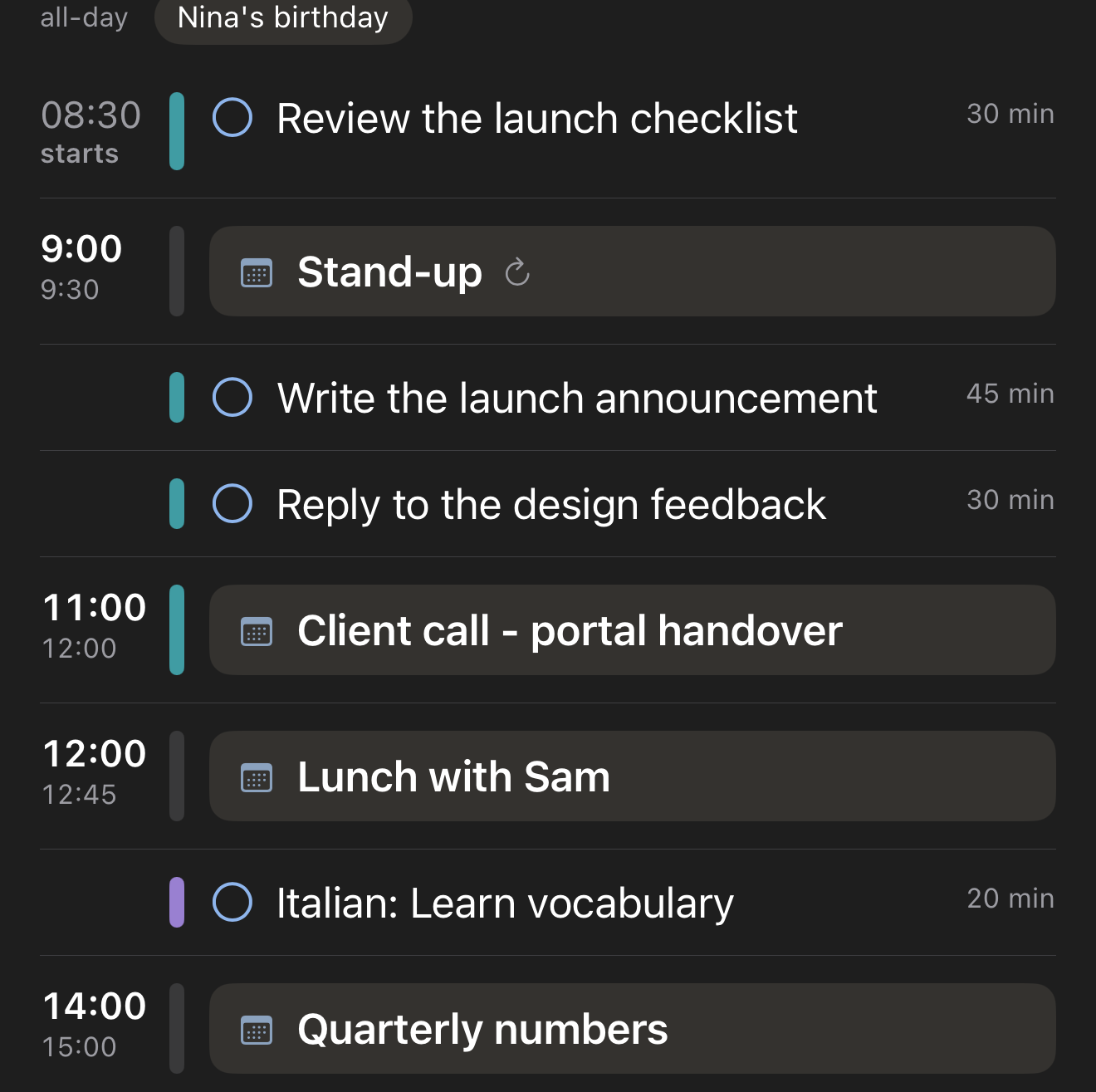
This is why a plan made in a to-do app tends to be fiction. The list doesn’t know about your Tuesday. It’ll happily accept twelve items on the day you’re in workshops from nine to five, and it will show you the same twelve, in the same confident tone, the next morning.
Fewer promises, kept
Try the deliberately unimpressive version: three things, sized to the space that’s actually left.
It feels like giving up. It isn’t — it’s the difference between nine promises broken and three kept. Same day, same hours, entirely different relationship with your own plan.
And when the day surprises you and you finish early, the backlog is right there. Pulling one more thing forward is a good problem. Rolling five things over is a bad one, and it’s the one most of us choose by accident every morning.
What to do with the rest
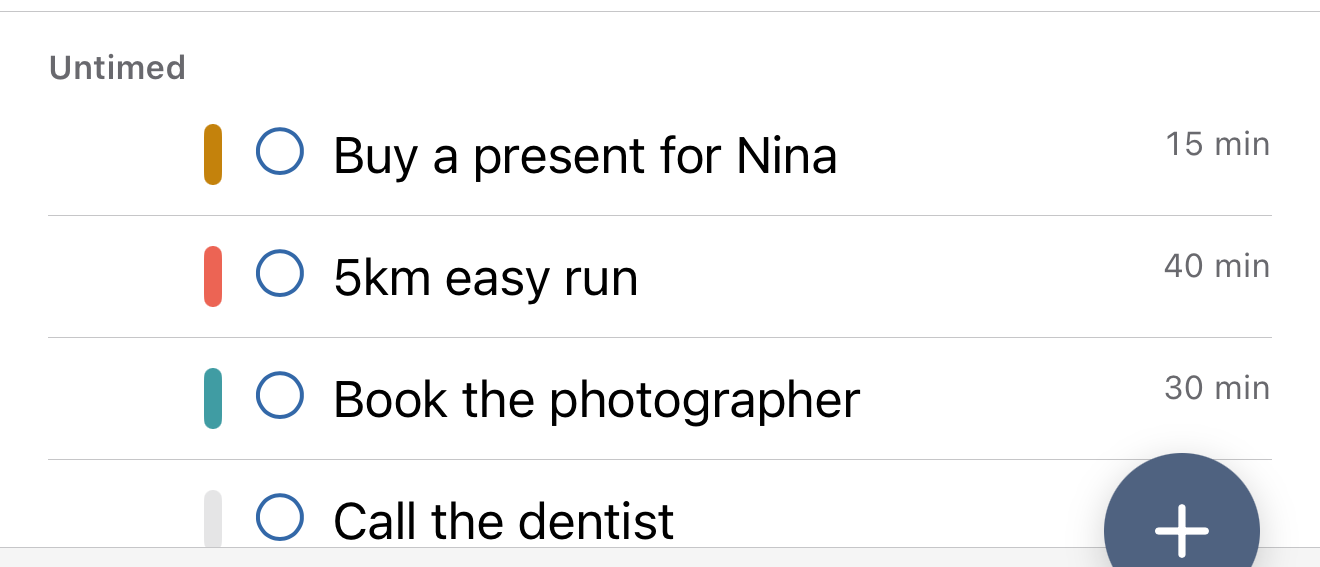
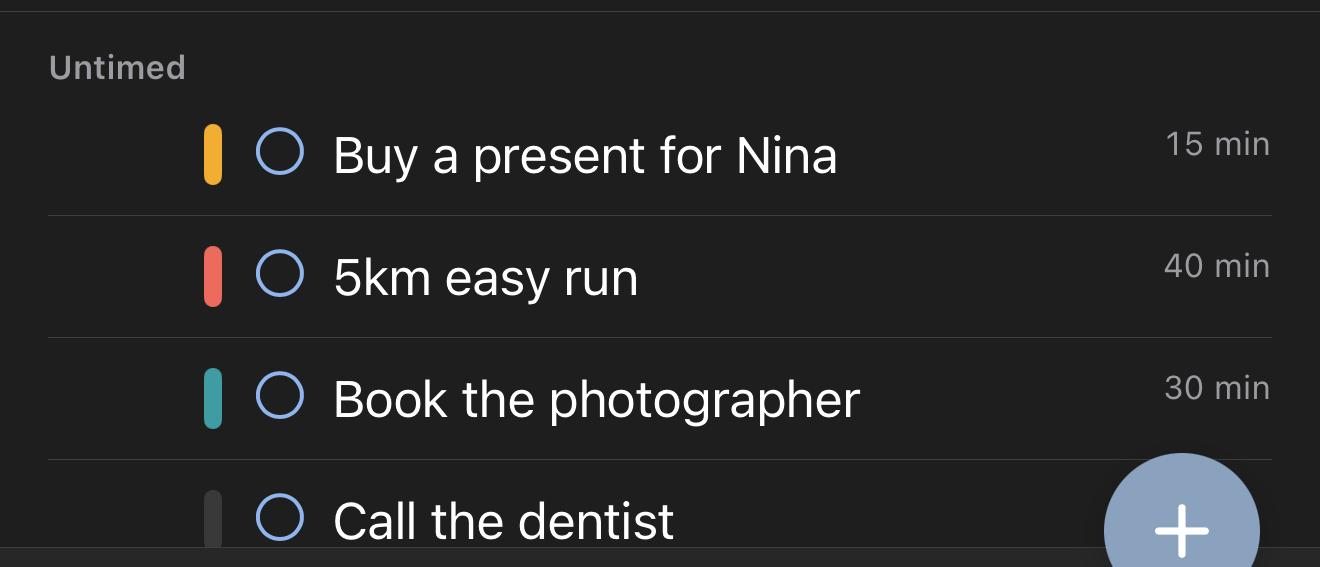
The instinct is to keep the other six on the day anyway, “so you don’t forget”. That’s exactly what makes an honest plan impossible: the day becomes a place where things are stored rather than a place where things are decided.
Let them wait somewhere that isn’t today. They’re not lost — they’re just not pretending to be this afternoon’s problem. Your day should show what you’re actually doing, not everything you might one day do.
The test
At the end of the day, one question: could this plan have been finished by a normal person having a normal day?
If the answer is regularly no, the problem was never your discipline. It was that you kept planning for a day you don’t have.
Make My Day puts your appointments on the timeline first, so you plan into the space that’s actually left. See how it works.